
- Analytics
- Trading News
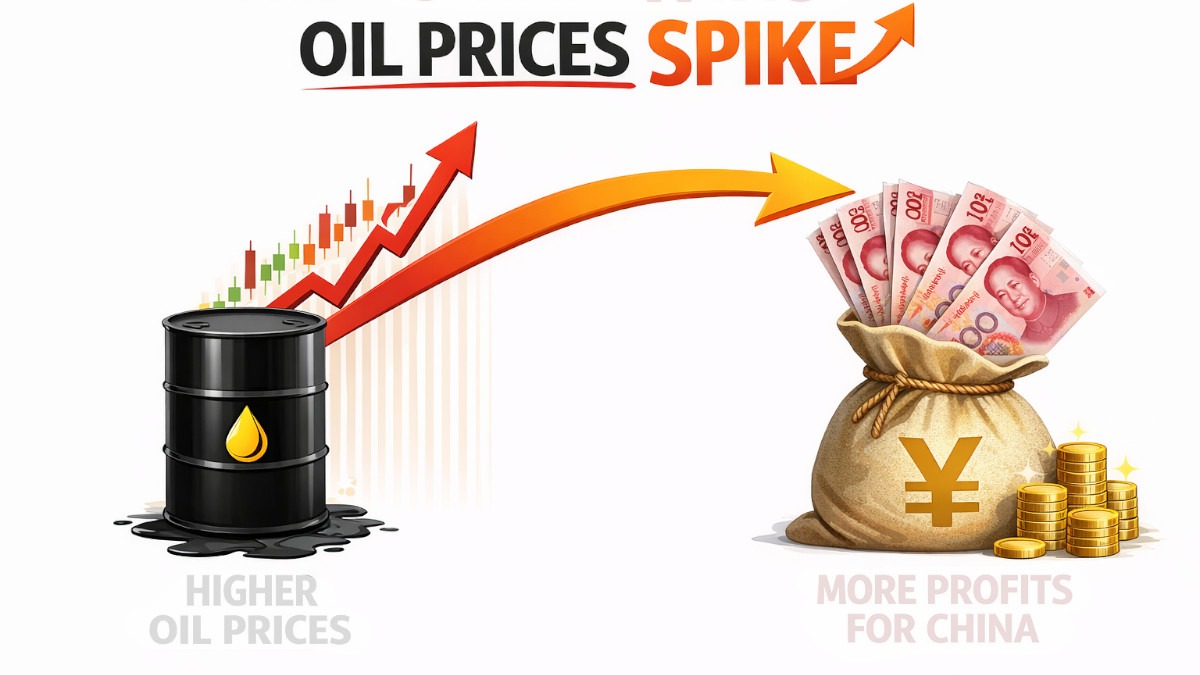
- Why China Wins When Oil Prices Spike
Why China Wins When Oil Prices Spike
Key Takeaways
- The Paradox - China's import dependence doesn't translate to vulnerability
- The Stockpile Advantage - the 1.13-2M bpd surplus buffer and how it's deployed
- Supply Diversification - Russia and Iran as discounted feedstock lifelines
- The Refiner's Opportunity - how China could flip from importer to profitable exporter of refined products
- Two Strategic Paths - import reduction vs. sustained throughput, and the logic of each
- The Inflation Firewall - state price controls as a competitive weapon against Western rivals
Paradox of the World's Largest Energy Importer
Conventional geopolitical logic would suggest that China, as the world's largest importer of crude oil and natural gas, should be among the most acutely exposed nations to an energy price shock triggered by war in the Middle East. When the United States and Israel launched strikes (started war) against Iran, markets prepared for a rise in crude prices and with it, the prospect of inflationary pain rippling across the global economy.
However, China is structurally isolated from the very crisis that threatens to destabilize energy markets in Europe, Asia, and North America.
The reason is years long aggressive inventory accumulation, diversified supply sourcing, and state control over domestic fuel pricing.
The Stockpile Advantage
China does not publicly disclose the full size of its crude oil reserves. However, analysts can piece together a rough picture by comparing import and domestic production volumes with refinery throughput.
- Throughout 2025, China accumulated crude oil inventories with an estimated surplus of 1.13 million barrels per day. Imports rose sharply toward the end of the year, with a record high of 13.18 million barrels per day recorded in December alone. If domestic production had remained at approximately 4.2 million barrels per day and refinery throughput had remained at around 14.7 million barrels per day in the first months of 2026, the estimated surplus for January and February could have approached 2 million barrels per day, a remarkable accumulation by any measure.
This inventory serves as a financial and operational shock absorber. When Brent crude futures jumped 7.3% to a year-high of $77.77 per barrel immediately after the Iran strikes, the surge, which alarmed traders in London and New York, was perceived in Beijing quite differently. Chinese refineries are not obligated to replenish inventories at current spot prices; instead, they can use existing stockpiles, reduce imports, and weather the period of instability at a much lower cost than their competitors.
Supply Diversification: The Sanctioned-Barrel Lifeline
China's resilience is supported by the fact that the country imports Russian oil, which is subject to price caps and sanctions following the invasion of Ukraine, and which arrives at a consistently discounted price compared to global benchmarks.
Iranian oil, whose exports are also restricted by US sanctions, is also exported to China. Any Iranian tankers that managed to transit the Strait of Hormuz before the attack on Iran last weekend represent additional supplies at reduced prices now heading to Chinese ports.
So, Middle East conflict, which threatens to reduce the supply of freely traded oil, does not directly affect China's access to Russian or Iranian volumes and may, in fact, increase the relative attractiveness of these supplies as an alternative to disrupted supplies from the Persian Gulf states. The result is a situation in which China can keep its refineries running smoothly even as competitors try to replace lost Middle Eastern supplies at higher prices.
The Refiner's Opportunity
Perhaps the most paradoxical aspect of China's position is the potential for its oil refineries to directly benefit from regional supply shortages.
The logic is simple, if prolonged disruptions in oil supplies to the Middle East limit the availability of crude oil for Asia's largest export-oriented refining centers, particularly India and Singapore, the resulting shortage in petroleum product markets will lead to a sharp rise in the prices of diesel, gasoline, and jet fuel.
Chinese refineries, which hold significant crude oil reserves purchased at prices significantly below current market prices, can either increase refining volumes to meet domestic demand or redirect excess petroleum products to export markets at inflated prices.
Two Strategic Paths for China's Import Policy
- Import reduction. By reducing oil purchases from approximately 12.5 million barrels per day to 10.5-11 million bpd by mid-year, China will ease the pressure on its domestic cash flows, avoid inflated prices for low-cost oil, and reduce inventories that were built at a much lower cost.
This approach will allow China to weather the price crisis while its competitors bear the full brunt of its impact. - Sustained or increased refinery throughput. By maintaining high refining volumes, China will increase its exports of petroleum products to a market experiencing a supply shortage.
This approach sacrifices some financial efficiency in exchange for long-term trade relations with neighboring fuel-importing countries at a time when China is the only viable large-scale alternative supplier.
Two strategies could be adopted, namely, in the short term, China could reduce imports, using inventories to maintain supply levels, before resuming more aggressive imports once prices stabilize at lower levels.
The Inflation Firewall
The final and perhaps most significant aspect.
In most market economies, a sharp rise in global oil prices quickly leads to higher gasoline prices, increased transportation costs, and a broad inflationary impulse that reduces household purchasing power and corporate profits.
The Chinese government maintains direct administrative control over retail fuel prices. Beijing sets the prices at which consumers and businesses purchase gasoline and diesel fuel, and adjusts these prices according to a schedule that is not mechanically linked to international benchmarks.
In practice, this means that a global surge in oil prices will not necessarily lead to corresponding inflation in raw material costs in China. Chinese manufacturers, logistics companies, and consumers can continue to operate with stable energy costs, even while their counterparts in the United States and Europe face sharp price increases.
Bottom Line Is
China is far from being a victim of the energy fallout from the Iranian conflict; it is quite likely to emerge as a winner from this episode – whether through lower import costs, unexpectedly high refining profitability, or expanded competitive advantages in energy-intensive manufacturing. Paradoxically, the world's largest energy importer may prove to be the most resilient major economy in this crisis.
For policymakers in Washington, Brussels, and the capitals of allied countries, this lesson is proving to be a painful one. Energy sanctions and supply disruptions, intended to deter adversaries, can, under certain conditions, concentrate costs among friendly countries and create unforeseen benefits for those targeted by these policies.
New powerful tool, Brent Crude Oil Technicals
New powerful tool, Brent Crude Oil Technicals
Live Technical Analysis with instant forecast using most popular indicators and oscillators.
Try Now

If you don’t find a way to make money while you sleep, you will work until you die.- Warren Buffett